How to Estimate Short-Term Rental Costs in Estonia Before You Buy


A short-term rental property in Estonia can look attractive on paper.
The listing photos may be bright, the location may seem strong, and the nightly rate potential may appear promising. But before buying, investors need to look beyond possible income and understand the costs that come with owning and operating the property.
Short-term rental is not the same as ordinary property ownership. It can involve more cleaning, more furnishing, more guest communication, more wear and tear, and more frequent small repairs. A property that seems profitable at first can become less appealing if the operating costs are underestimated.
This is especially relevant for international buyers who may not live in Estonia full time. If you are managing the property from abroad, you may need local support for cleaning, maintenance, guest setup, check-in issues, furnishing, and emergency access.
A good investment decision should include both sides of the calculation: expected income and expected costs.
This guide explains how to estimate short-term rental costs in Estonia before you buy, so you can judge whether a property has realistic income potential.
Start With the Full Ownership Cost
Before thinking about guests, begin with the basic cost of owning the property. Every property has running costs, even when it is empty. These costs affect your monthly break-even point and your return on investment.
Common ownership costs may include: • Mortgage payments, if financed • Apartment association fees • Heating and building service charges • Electricity and water • Internet • Insurance • Property repairs • Building maintenance costs • Banking or transfer costs • Accounting or administrative support, if needed
Apartment association fees deserve close attention. In Estonia, apartment buyers are not only buying the unit. They are also buying into the building. Monthly costs can vary depending on heating type, building age, renovation history, loans connected to the building, shared services, and planned works.
A lower purchase price may not be a bargain if the monthly costs are high. If you are comparing properties, Bryan Estates’ properties in Estonia page is a useful starting point for reviewing location, price, and property type.
Estimate Furnishing and Setup Costs
A short-term rental needs to be guest-ready before it can earn income. Even a clean apartment may need furniture, bedding, kitchen items, lighting, storage, towels, decor, appliances, and practical guest materials. These costs can be higher than expected, especially if the property is empty or only partly furnished.
Setup costs may include: • Bed and mattress • Sofa or seating • Dining table and chairs • Wardrobe or clothing storage • Curtains or blinds • Bedding and pillows • Towels • Kitchenware • Small appliances • Cleaning supplies • Lighting • Wi-Fi router or internet setup • Guest guide materials • Smart lock or lockbox, where suitable • Photography preparation
Investors should avoid assuming that “furnished” means “rental-ready.” A property may include furniture that is fine for private use but not practical for regular guest stays.
Short-term rental furniture should be comfortable, durable, easy to clean, and simple to replace. The goal is not to create a luxury showroom. The goal is to create a property that guests enjoy and cleaners can reset efficiently. If the property needs design or setup planning, Bryan Estates’ renovation and design service can help assess what should be improved before guest use.
Add Cleaning and Laundry Costs
Cleaning is one of the most important recurring costs in a short-term rental. A long-term rental may only need cleaning between tenants. A short-term rental may need cleaning after every stay. That means the cost depends heavily on booking volume, average stay length, property size, and guest expectations.
Cleaning costs may include: • Standard turnover cleaning • Laundry for bedding and towels • Restocking basic supplies • Deep cleaning • Window cleaning • Emergency cleaning after difficult stays • Cleaner travel time or access costs • Replacement of damaged or stained items
Short stays can create more frequent turnover. For example, a property with many two-night stays may require far more cleaning than a property with fewer week-long stays.
This can affect profitability. Higher occupancy is not always better if each stay creates a cleaning cost that reduces the margin. When estimating income, calculate cleaning costs based on expected bookings, not only expected occupancy.
Consider Guest Supplies and Consumables
Guests expect basic supplies to be available. These costs may seem small, but they repeat throughout the year. They also affect reviews. A guest who arrives to find no toilet paper, no dish soap, no rubbish bags, or no basic kitchen items may feel the apartment was poorly prepared.
Common consumable costs include: • Toilet paper • Soap • Shampoo or shower gel, if provided • Dish soap • Sponges • Rubbish bags • Paper towels • Coffee or tea, if provided • Salt and pepper • Laundry detergent • Cleaning products • Replacement batteries • Light bulbs
You do not need to overprovide, but you should budget for regular restocking. The more professional the guest experience, the more predictable these supply systems need to be.
Budget for Maintenance and Wear
Short-term rental properties often experience more wear than private homes. Guests may use furniture, appliances, heating, windows, locks, showers, and kitchen equipment differently from an owner. Suitcases may scrape walls. Towels may stain. Dishes may break. Door handles, blinds, lights, and small appliances may need replacement.
Budget for both small repairs and gradual wear. Common maintenance items include: • Replacing broken glasses or plates • Repairing loose handles • Replacing bulbs • Fixing drains • Repairing blinds or curtains • Replacing stained bedding • Touching up walls • Servicing appliances • Fixing locks or access systems • Repairing furniture
A property that looks low-maintenance at purchase may still need regular attention once guests begin using it. A sensible investor should set aside a maintenance reserve. This helps avoid treating every small repair as an unexpected crisis.
Include Management and Local Support
If you do not live near the property, local support may be essential. Someone may need to coordinate cleaners, check the apartment after difficult stays, replace supplies, meet contractors, handle key issues, inspect damage, or respond to urgent problems.
Management costs may include: • Guest communication • Check-in support • Cleaner coordination • Maintenance coordination • Emergency callouts • Property inspections • Supply restocking • Review follow-up • Calendar and pricing support • Owner reporting
Some owners try to manage everything themselves from abroad. This may work for a small number of stays, but it can become stressful if issues happen late at night, during weekends, or between back-to-back bookings.
A short-term rental works best when there is a clear plan for local problems. Bryan Estates’ Airbnb Investments service can help investors think through whether a property is practical to operate as a guest rental.
Review Platform and Payment Costs
Short-term rental income is rarely the same as the amount guests pay. Platforms, payment processors, currency conversion, banking fees, and transfer costs can all affect the final amount received by the owner.
When estimating income, consider: • Booking platform fees • Payment processing fees • Currency conversion costs • Bank transfer costs • Refunds or cancellations • Discounts for longer stays • Seasonal pricing changes • Promotional pricing for early bookings
It is easy to overestimate revenue by looking only at nightly rates. The net amount after fees is what matters. For international owners, currency movement and cross-border payment timing may also affect planning.
Think About Taxes and Accounting
Rental income can create tax and reporting obligations. The right setup depends on how the property is owned, where the owner lives, whether the property is owned personally or through a company, and how the rental activity is structured.
Investors should speak with a qualified tax adviser before relying on any income projection.
Possible cost items may include: • Accounting support • Tax reporting • Company administration, if applicable • Bookkeeping for rental income • Expense tracking • VAT questions, where relevant • Home-country reporting for international owners
Tax should be reviewed before purchase, not after the property starts receiving bookings. A property may still be a good investment, but the real return should be calculated after tax, not before.
Account for Vacancy and Seasonality
Short-term rental demand can change across the year. Some locations may perform strongly in summer, during events, or around travel periods. Others may depend more on business travel, weekend demand, university activity, or local tourism.
A sensible estimate should include different scenarios. For example: • Strong season • Normal season • Slow season • High-occupancy month • Low-occupancy month • Longer-stay period • Short-stay period
Do not base the full investment on the best possible month. A property that performs well in July may have very different results in February. The annual average matters more than one strong period.
This is why investors should calculate both optimistic and conservative scenarios before buying.
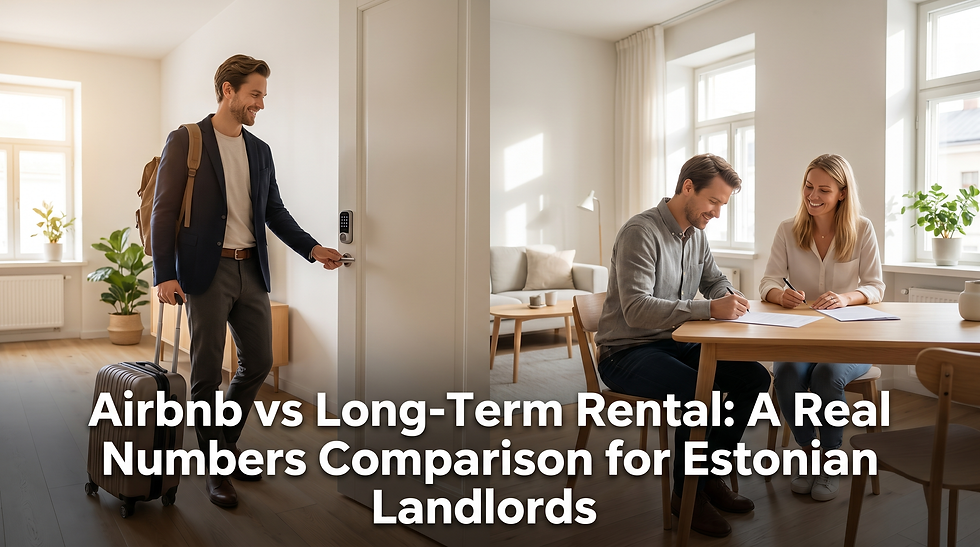
Compare Short-Term and Long-Term Rental
Before buying, compare short-term rental with long-term rental. Short-term rental may produce higher gross income, but it also has higher operating costs and more active management. Long-term rental may produce lower monthly income but can be simpler and more predictable.
Compare both models using: • Expected monthly income • Cleaning costs • Management time • Vacancy risk • Furnishing needs • Maintenance costs • Tenant or guest turnover • Utility responsibility • Regulatory or building restrictions • Owner involvement
A property should not be bought only because the short-term rental number looks higher. The better question is which model produces the strongest net return for the level of work and risk involved.
Some properties are better suited to long-term tenants. Others make more sense as guest rentals. A few can work for both, which gives the owner more flexibility.
Build a Simple Monthly Cost Model
Before making an offer, investors should build a basic monthly model. It does not need to be complicated. It should simply show expected income, fixed costs, variable costs, and net income.
A simple model should include: • Expected nightly rate • Expected occupied nights • Gross monthly income • Platform and payment fees • Cleaning and laundry costs • Supplies • Utilities • Apartment association fees • Internet • Insurance • Management costs • Maintenance reserve • Mortgage payment, if financed • Accounting or administration costs • Estimated net income
Then test several scenarios. Ask: • What happens if occupancy is lower than expected? • What happens if cleaning costs are higher? • What happens if the building fees increase? • What happens if repairs are needed in the first year? • What happens if the property takes longer to prepare? • What happens if the nightly rate must be discounted?
A good property should still make sense under realistic conditions.
Do Not Forget Initial Downtime
A property rarely starts earning income the day after purchase. There may be time needed for cleaning, furnishing, internet setup, photography, guest guide creation, platform listing, maintenance, or renovation. If the owner lives abroad, the setup period may take longer.
Initial downtime can include: • Waiting for handover • Cleaning • Buying furniture • Delivery delays • Repairs • Internet installation • Photography • Listing setup • Approval or building checks • First booking delay
This should be part of the investment calculation. If a property takes two months to prepare, those are two months of ownership costs without rental income.
Final Thoughts
Estimating short-term rental costs in Estonia before you buy is one of the smartest steps an investor can take.
The purchase price and possible nightly rate are only part of the picture. Investors also need to understand ownership costs, furnishing, cleaning, laundry, guest supplies, maintenance, management, platform fees, taxes, seasonality, and downtime.
A strong short-term rental investment should work after costs, not only before them.
The best estimates are practical and conservative. They allow for slower months, repairs, cleaning costs, and setup time. They also compare short-term rental with long-term rental so the owner understands the real trade-offs.
The goal is not to find the highest possible revenue number. The goal is to understand the property’s real operating picture before you buy.
If you are considering a short-term rental property in Estonia, Bryan Estates can help you assess location, setup needs, rental suitability, and ownership costs before you commit. Start with Bryan Estates’ Airbnb Investments service, browse current properties in Estonia, or contact Bryan Estates for guidance before buying.


Comments