Why Global Investors Value Countries with Strong Passports
- John Philips

- Jan 28
- 4 min read
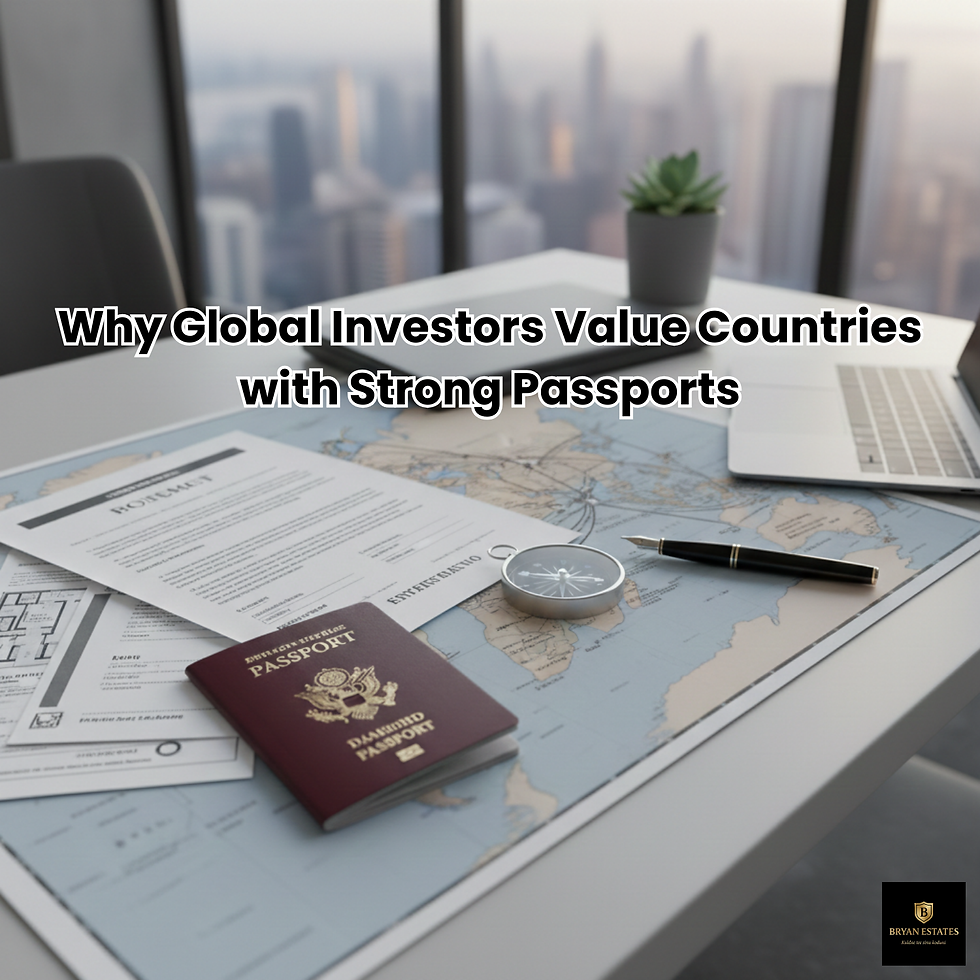
For global investors, a strong passport is not a lifestyle perk—it’s risk management.
In 2026, capital moves fast, regulations change quickly, and geopolitical shocks are no longer rare events. Investors increasingly value countries whose passports offer mobility, predictability, and long-term legal stability, because those factors directly protect people, assets, and optionality.
This article explains why strong passports matter to global investors, how they reduce risk beyond travel convenience, and why countries like Estonia consistently attract internationally minded capital.
Passport Strength Is About Optionality, Not Tourism
When investors talk about “passport strength,” they’re not talking about vacations.
They’re asking:
Can I move quickly if conditions change?
Can my family relocate without immigration bottlenecks?
Can I operate across borders with minimal friction?
Is my legal status predictable long-term?
A strong passport answers yes to those questions more often—and faster.
1) Mobility = Risk Mitigation
The ability to move freely is a hedge.
Strong passports allow investors to:
relocate themselves or family members quickly
respond to regulatory or political changes
diversify where they live, work, and hold assets
avoid being locked into a single jurisdiction
In unstable environments, mobility is not optional—it’s defensive infrastructure.
This is why passport power increasingly appears in serious wealth planning conversations.
2) Low Friction Enables Faster Decision-Making
Visa-free or low-friction travel means:
no embassy delays
no unpredictable approvals
no weeks of lost time
For investors, this enables:
rapid due diligence trips
last-minute deal negotiations
multi-country portfolio management
faster response to opportunities and risks
Time friction is a hidden cost. Strong passports remove it.
3) Strong Passports Signal Institutional Trust
Passport strength reflects how the world views a country’s systems.
Countries with strong passports are usually:
rule-of-law jurisdictions
politically stable
compliant with international standards
administratively reliable
This matters because:
banks trust documents from these countries
counterparties assume lower compliance risk
borders treat citizens as low-risk travelers
In other words, passport strength is a proxy for system quality.
Estonia is a clear example of this dynamic: its passport power flows directly from trust in its institutions.
For deeper context, see:How Estonia Became a Global Mobility Leader: A Passport Built on Trust.
4) EU Passports Multiply Investment Flexibility
From an investor perspective, EU passports are structurally different.
They offer:
freedom to live, work, and invest across 27+ countries
access to multiple legal and tax systems
the ability to diversify residence without visas or permits
This is why EU citizenship is often valued more highly than raw visa-free counts.
An Estonian passport, for example, combines:
EU freedom of movement
global visa-free access
low geopolitical friction
That combination is exceptionally attractive for long-term planners.
For comparison, see:Estonian Passport vs. US and UK Passports: Travel Freedom Compared (2026 Update).
5) Family Security Is Part of Investment Strategy
Sophisticated investors plan across generations.
A strong passport:
protects children’s future mobility
reduces dependency on a single country
allows education and career options globally
creates a fallback if conditions change
This is why passport strength is increasingly discussed alongside:
asset diversification
residency planning
long-term estate strategy
It’s not emotional—it’s strategic.
6) Predictability Beats Power
Some passports come from powerful countries—but still create friction.
Investors increasingly discount passports that involve:
high scrutiny at borders
sudden policy changes
extraterritorial obligations
unpredictable enforcement
What global investors prefer instead:
legal clarity
policy stability
low-friction mobility
quiet reliability
This is why smaller, well-governed countries often outperform larger ones in practical passport value.
7) Passport Strength and Capital Mobility Go Together
Capital and people are linked.
Countries that support:
easy movement of people
transparent governance
predictable rules
…tend to attract:
foreign direct investment
internationally mobile professionals
long-term capital
Passport strength reinforces this cycle.
Estonia’s combination of:
digital governance
EU integration
strong passport credibility
…is one reason it remains attractive to globally minded investors beyond pure tax considerations.
8) Important Clarification: Citizenship ≠ Residency ≠ Ownership
Investors often confuse three separate concepts:
Citizenship (passport power)
Residency (right to live locally)
Property ownership (asset holding)
They serve different purposes.
Strong passports come only from citizenship—not from:
e-Residency
buying property
short-term residence permits
For clarity, see:Estonia Residency & Property Ownership (2026): What Expats Need to Know.
9) Why Investors Watch Passport Rankings Closely in 2026
In today’s environment:
borders tighten faster than they loosen
trust-based access becomes more valuable
global fragmentation increases
Strong passports:
hold value over time
preserve optionality
reduce future regret
This is why passport strength is increasingly treated as a long-term asset, not a travel perk.
Final Takeaway: Strong Passports Protect More Than Travel
Global investors value strong passports because they protect:
mobility
time
optionality
family security
long-term flexibility
They are a form of invisible insurance
In 2026, countries with trusted institutions and strong passports—like Estonia—offer something increasingly rare: freedom that still works predictably.
If you’re planning a long-term international strategy involving Estonia—residency, relocation, property ownership, or eventual citizenship—understanding why passport strength matters helps you make decisions with clarity instead of assumptions. Learn more about the broader context here: About Bryan Estates.


Comments