What Is a Good Rental Yield in Estonia? A Practical Guide for Property Investors

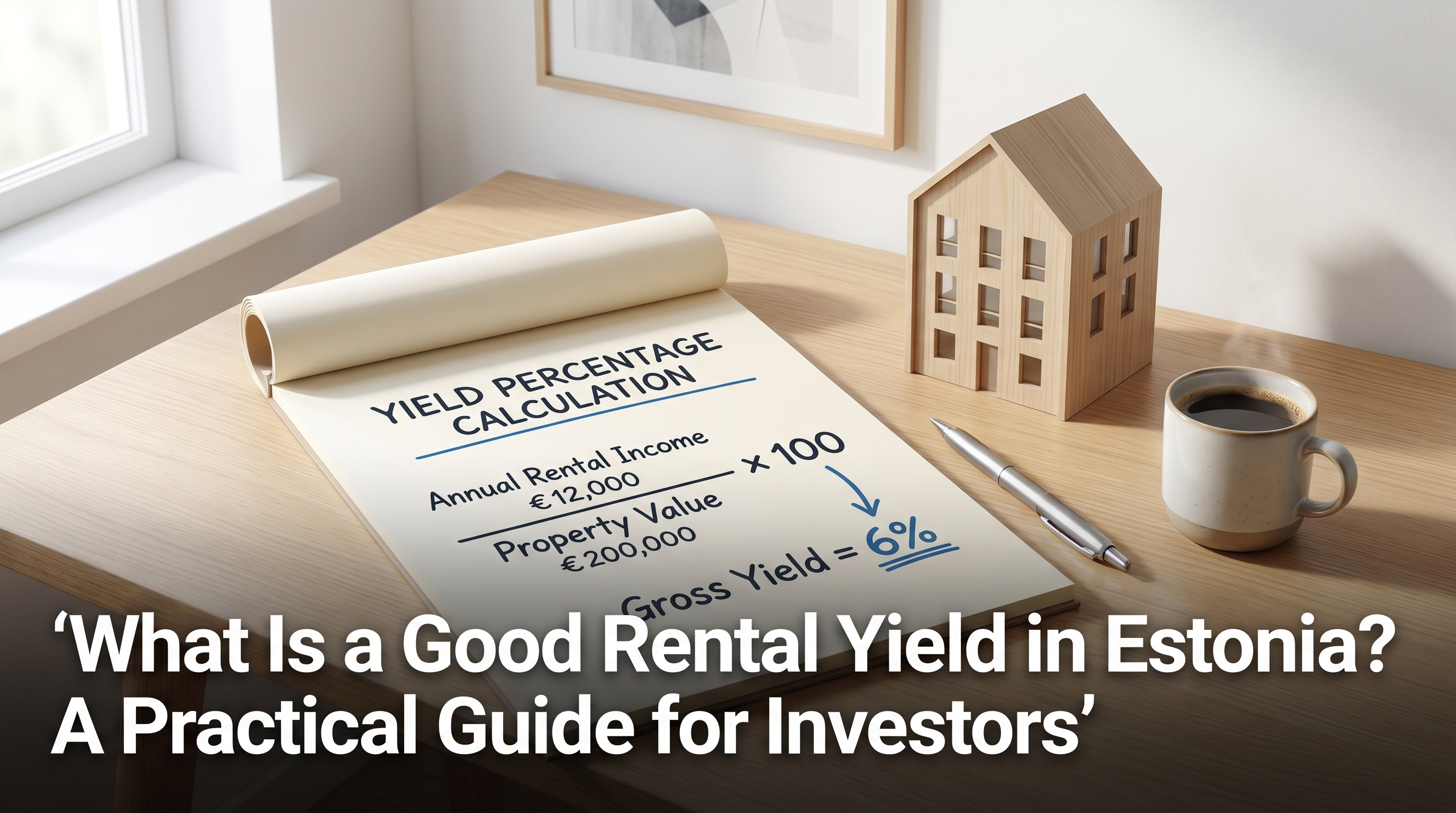
Rental yield is one of the most quoted numbers in property investment conversations — and one of the most misunderstood. Investors cite gross yields, net yields, and cash-on-cash returns interchangeably, often without distinguishing between them.
Before you can judge whether a property in Estonia offers a good yield, you need to know which yield you are measuring and what you are comparing it to.
Gross Yield vs Net Yield
Gross yield is the simplest calculation: annual rental income divided by purchase price. A property that costs €100,000 and rents for €700 per month has a gross yield of 8.4%.
Net yield is what actually matters. It accounts for all costs of ownership — management fees, maintenance, insurance, land tax, HOA fees, vacancy periods, and financing costs — before dividing by the purchase price.
A property with an 8% gross yield might deliver 4-5% net yield after costs. That is a very different number from the headline figure. Always calculate net yield before making any investment decision.
What Yields Actually Look Like in Estonia
As a general guide based on current market conditions:
• Central Tallinn, short-term rental: 5-8% net yield for well-run properties in strong locations
• Central Tallinn, long-term rental: 3.5-5.5% net yield
• Tartu, long-term rental: 4-6% net yield — lower purchase prices can support stronger yields
• Pärnu, seasonal short-term rental: 4-7% net yield with significant seasonal variation
• Regional cities and smaller towns: 5-8%+ gross yield — but liquidity risk is higher
These are realistic ranges based on current market conditions. Best-case projections are not a planning basis.
What Counts as a Good Yield in Estonia?
• Below 3.5% net: difficult to justify as a pure income investment at current purchase prices
• 3.5-5% net: acceptable for well-located properties with strong capital growth potential
• 5-7% net: a solid yield for a well-managed Estonian investment property
• Above 7% net: strong — usually achievable in regional markets or with active short-term rental management
Higher yields in smaller markets come with higher vacancy risk and lower liquidity. The yield premium compensates for risk, not just income.
The Capital Growth Dimension
Yield is only one part of the total return equation. Tallinn property values have appreciated meaningfully over the past decade, and investors who bought in 2015 have benefited from both rental income and capital growth. Do not evaluate yield in isolation — total return is what your investment actually delivers.
Running Your Own Numbers
Our mortgage calculator can help you factor in financing costs. Browse our current property listings to see what is available at different price points, and our invest in Estonia page covers the broader investment context.
If you want a yield assessment on a specific property, get in touch with the Bryan Estates team. We can give you a realistic net yield calculation based on actual market data rather than headline figures.


Comments