How to Read an Estonian Land Registry Extract Before Buying

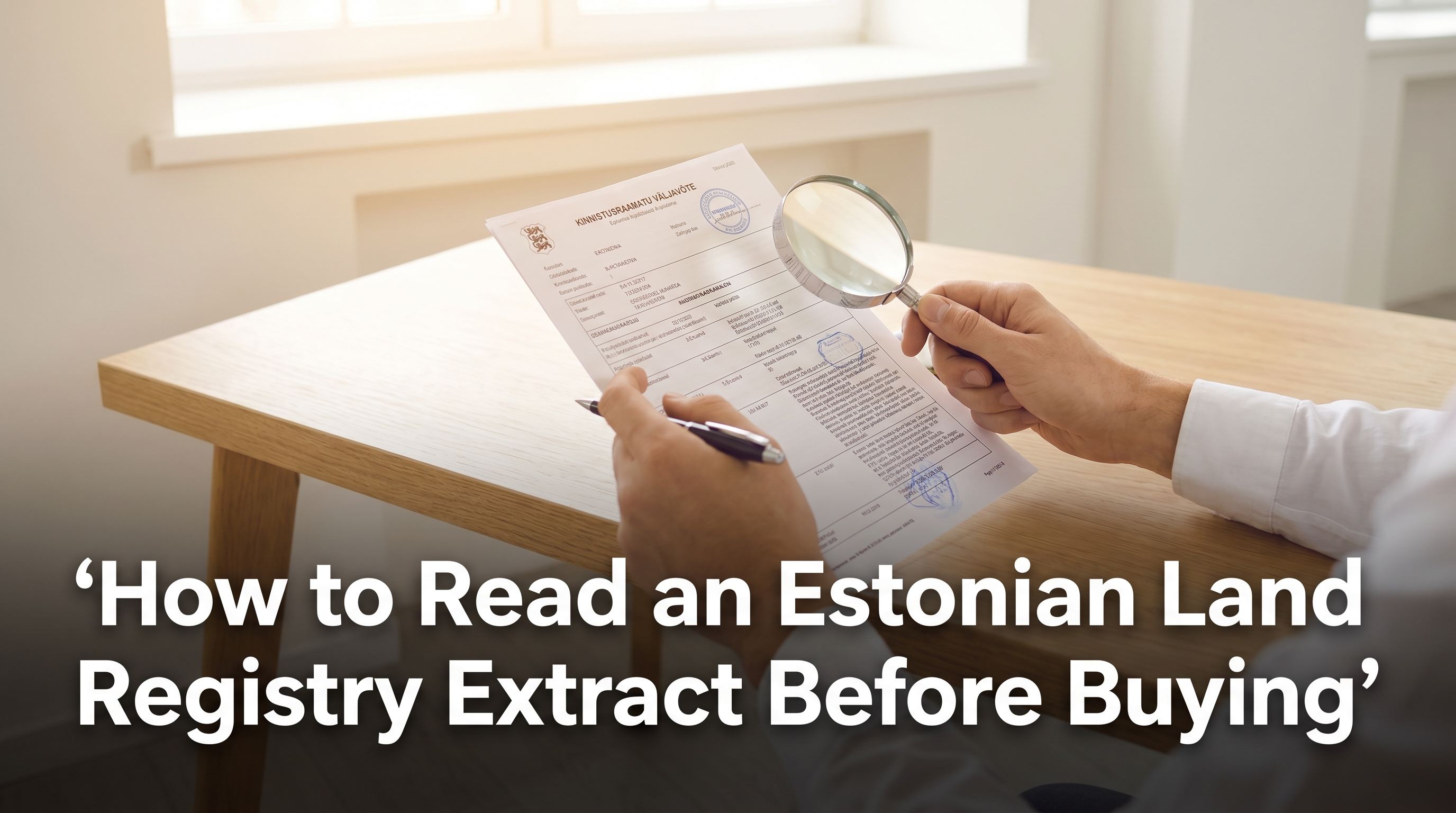
The Estonian land registry extract — kinnistusraamatu väljavõte — is one of the most important documents in any property transaction.
It tells you who owns the property, what encumbrances exist on it, and whether there is anything that could complicate your purchase or affect your ownership. Most buyers see this document for the first time at the notary appointment. By then, it is too late to act on what it contains.
Where to Find the Extract
The Estonian land register is publicly accessible online through the e-Land Register portal. Anyone can search for a property by address or cadastral number and view its current registration entry. You do not need a lawyer or agent to access the basic extract — it is a public document. For a property you are seriously considering, pull the extract yourself before you make an offer.
Section One: The Property Object
The first section describes the property itself — its cadastral number, the registered size, and the share of land the apartment ownership carries. Check that the registered size matches what the seller or listing describes, and that the property is registered as an apartment ownership (korteriomand) — the standard form for apartment purchases in Estonia.
Section Two: Ownership
This section confirms who currently owns the property. The registered owner must be the person selling to you. If the property is jointly owned, all owners must consent to and participate in the sale.
If there is a discrepancy between the registered owner and the person you are dealing with, stop and get legal advice before proceeding.
Section Three: Encumbrances and Restrictions
This is the section that requires the most careful attention. It lists any mortgages, liens, easements, or restrictions registered against the property.
• Mortgages: must be discharged before or at the point of transfer — never complete where an existing mortgage is not simultaneously discharged
• Notations (märked): records of legal situations including pre-emption rights, lease registrations, court orders, or restrictions on disposal — each needs to be understood
• Easements: rights that third parties have over the property, such as a right of way
If the extract is clean — registered to the right owner, no surprising encumbrances, no unusual notations — you can proceed with confidence. If anything gives you pause, take it to a bilingual legal advisor before you make an offer.
Getting Support
Browse our property listings for current options across Estonia. Our FAQ page covers common legal questions buyers raise before purchase, and get in touch with the Bryan Estates team if you want a guided walkthrough of a specific property's land registry entry before you decide. Our invest in Estonia page covers the broader market context.


Comments