How to Maximise Occupancy for Your Estonian Short-Term Rental Year-Round

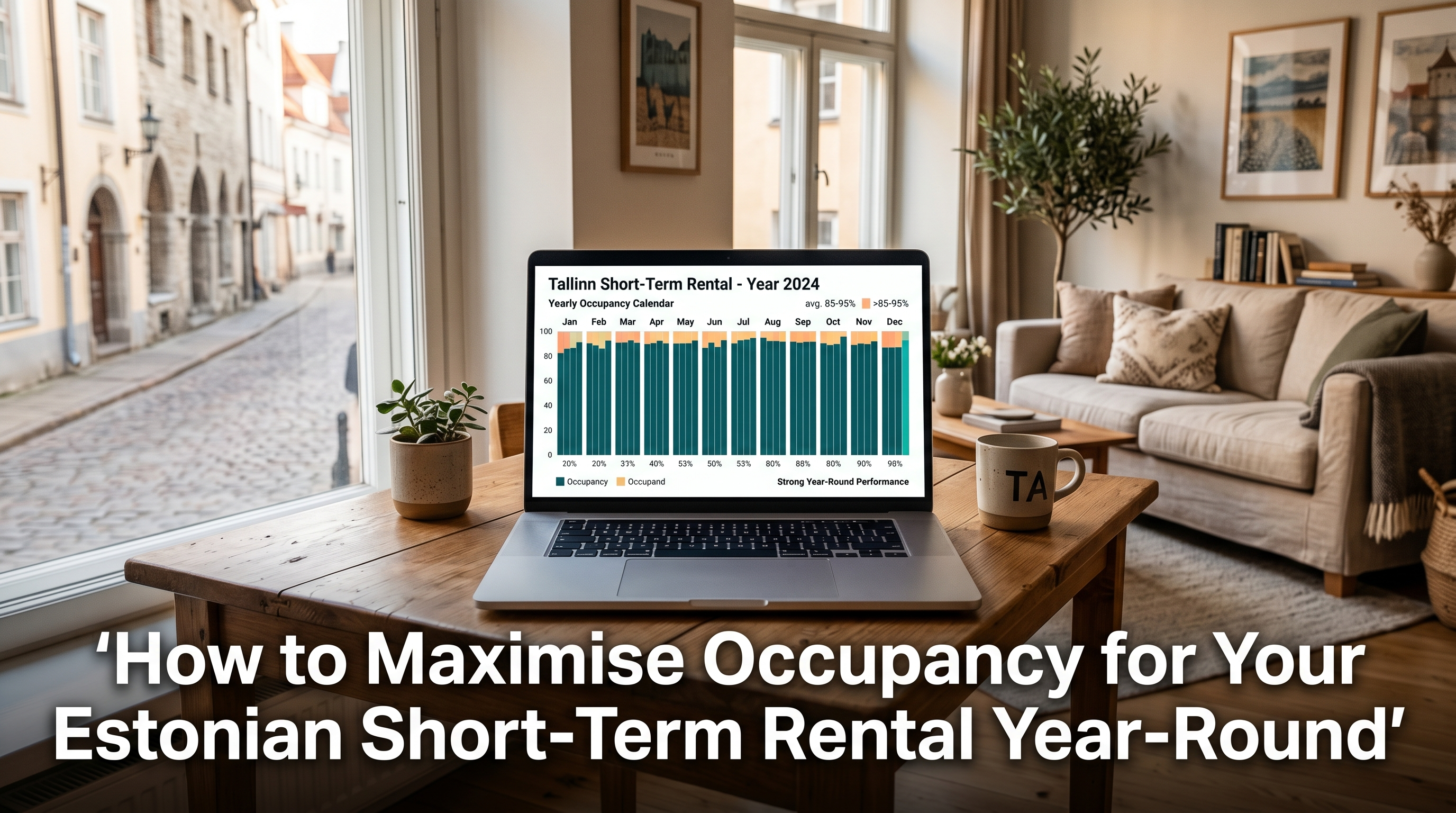
High occupancy is the engine of short-term rental income. A property that achieves 85% annual occupancy generates dramatically more income than one that hits 90% in summer and 45% in winter — even if the nightly rate is identical.
The difference between these two outcomes is not luck or location alone. It is active management of pricing, positioning, and the calendar.
Understand Your Demand Calendar — Then Act on It
In Tallinn, the predictable high-demand periods are:
• Late April through August — the main tourist season
• December — the Christmas market period generating genuine demand from Finnish and Scandinavian visitors
• Major conference and business event dates — Tallinn hosts significant tech and business events that fill accommodation in otherwise shoulder-period weeks
The predictable lower-demand periods are November, and January through March. These months are where occupancy strategy matters most. For Pärnu, the calendar is more concentrated: peak demand in June, July, and August, with the rest of the year requiring more active management.
Price Dynamically — Not Manually
Static pricing is one of the most common occupancy killers for Estonian short-term rentals. A single nightly rate year-round leaves money on the table during peak periods and results in vacant nights during slower periods that would have filled at a lower price.
Dynamic pricing tools like PriceLabs, Wheelhouse, or Airbnb Smart Pricing all automate this to varying degrees. The simplest implementation is to set a base price that generates profit at 60% occupancy, and allow dynamic pricing to push rates significantly higher during known high-demand periods. This single change consistently improves annual revenue for hosts who were previously on static pricing.
Target Multiple Guest Types
Relying on a single guest profile — short-stay leisure tourists — limits both your occupancy and your income. The highest-performing Estonian short-term rentals serve multiple demand types:
• Two to four night leisure stays from international visitors during peak season
• One to three week bookings from remote workers in autumn and winter when Tallinn's quiet season makes it attractive for focus travel
• Monthly bookings from relocating professionals, visiting academics, or buyers trying out living in Tallinn before purchasing
Monthly or extended-stay bookings at a moderate discount to the nightly rate often produce higher net income than a mix of short-stay nights with gaps — because there are no cleaning costs, no check-in friction, and no marketing spend between bookings.
Address the Off-Season Head On
Rather than passively accepting lower winter occupancy, the best Estonian hosts actively programme their calendar for it:
• Adjust minimum stay requirements downward in low-demand months to capture shorter bookings
• Price specifically for the Christmas market period — December rates in Tallinn can approach summer peak levels for well-located properties
• Market the property's winter assets: proximity to excellent cafes, quietness compared to peak season, authenticity of Tallinn in snow
• Consider corporate or monthly lets as a bridge across the weakest winter weeks
Getting the Numbers Right
Our Airbnb investments page covers the full investment case for short-term rental in Estonia. Browse our property listings for options with strong year-round rental characteristics, and get in touch with the Bryan Estates team if you want a specific assessment of annual occupancy potential for a property you are considering. Our mortgage calculator can help you model whether the projected occupancy supports your financing.

Comments