What Documents Do You Need for Rent-to-Own in Estonia?

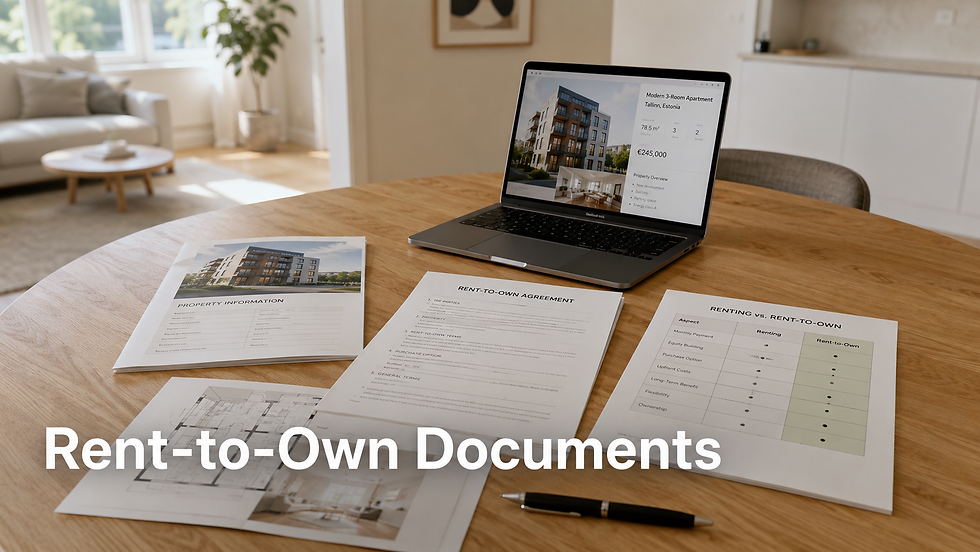
Rent-to-own can be an attractive path for buyers who want to secure a property in Estonia but are not ready to purchase immediately.
It can give a buyer time to prepare financing, understand the property, build confidence in the area, or settle into life in Estonia before completing a purchase. For sellers, it can create a structured route toward sale while keeping the property occupied and generating income during the agreement period.
But rent-to-own is not something to approach casually. Because it combines elements of renting, future purchase planning, payment structure, and legal commitment, the documentation needs to be clear from the beginning.
A good rent-to-own agreement should help both sides understand what is expected, what payments are due, how the purchase option works, and what happens if circumstances change.
This guide explains the main documents and information buyers usually need when considering rent-to-own in Estonia, plus the practical details that should be reviewed before signing anything.
Why Documentation Matters in Rent-to-Own
A normal rental agreement is already a serious commitment. A rent-to-own arrangement is more complex because the buyer may also be planning a future purchase.
That means the paperwork needs to answer more questions than a standard lease. For example: • Who is renting the property? • Who owns the property now? • What is the agreed monthly payment? • Is any part of the payment credited toward the future purchase? • What is the future purchase price or pricing method? • How long does the buyer have to exercise the purchase option? • What happens if the buyer decides not to purchase? • What happens if the seller wants to withdraw? • Who pays for utilities, repairs, insurance, and building costs? • What condition should the property be in at handover?
If these points are not documented clearly, both sides can end up with different expectations. That is why buyers should treat rent-to-own as a structured property transaction, not just a rental with a loose promise attached.
For a fuller overview of the model, Bryan Estates’ Rent-to-Own in Estonia page is a useful starting point.
Identity Documents
The first basic requirement is proof of identity. For an individual buyer, this usually means a valid passport, national ID card, or another accepted identification document. The seller, agent, bank, notary, or legal adviser may need to confirm who the buyer is before moving forward.
If the buyer is a company, company registration details may also be needed. This may include the company name, registry number, registered address, ownership structure, and confirmation of who has authority to sign.
Identity checks are not just a formality. Property transactions often require proper verification because money, ownership rights, and long-term obligations are involved.
Buyers should make sure that all names are spelled consistently across documents. A small mismatch between a passport, company document, bank document, or agreement can slow the process later.
Proof of Address and Contact Information
Buyers may also be asked to provide current address details and reliable contact information. This can include: • Residential address • Email address • Phone number • Country of tax residence, where relevant • Company registered address, if buying through a business • Local contact person, if the buyer is outside Estonia
For international buyers, contact details matter because the rent-to-own period may involve ongoing communication. Payments, building updates, maintenance issues, legal documents, and purchase deadlines all require a clear communication channel.
If you live outside Estonia, it is wise to decide who will respond quickly if something practical comes up at the property.
Proof of Income or Funds
A seller will usually want confidence that the buyer can keep up with rent-to-own payments and has a realistic path toward purchase.
This does not always mean the buyer must be ready to complete the purchase immediately. In many rent-to-own cases, the point is to give the buyer time. Still, the buyer should be able to show that the arrangement is financially realistic.
Documents may include: • Recent payslips • Employment confirmation • Business income evidence • Bank statements • Savings confirmation • Proof of funds for an initial option payment or deposit • Mortgage pre-assessment, if available • Information about expected future financing
For self-employed buyers, income may be less straightforward. In that case, sellers or advisers may ask for company accounts, tax records, or other proof that income is stable enough to support the agreement.
A buyer should be honest about financing readiness. Rent-to-own works best when the future purchase plan is realistic from the start. Bryan Estates’ mortgage calculator can help buyers form an early view of monthly affordability before agreeing to a rent-to-own structure.
Source of Funds Information
Property transactions may require questions about where money is coming from. This can apply to deposits, option payments, monthly payments, future purchase funds, or company funds. The level of detail can vary, but buyers should be prepared to explain the source of funds clearly.
Examples may include: • Salary savings • Business income • Sale of another property • Investment proceeds • Family support • Company reserves • Mortgage financing • Inheritance or other documented funds
This can feel personal, but it is a normal part of financial and property checks. Preparing documents early can help avoid delays when the agreement moves forward.
The Rent-to-Own Agreement
The central document is the rent-to-own agreement itself. This should not be vague. It should clearly explain the rental terms, the future purchase option, the payment structure, and the rights and responsibilities of both sides.
A strong agreement should usually cover: • Property address and description • Buyer and seller details • Agreement start date • Agreement length • Monthly payment amount • Deposit or option payment, if any • Whether any payment is credited toward purchase • Purchase option deadline • Purchase price or pricing method • Conditions for exercising the option • Responsibility for utilities and running costs • Repair and maintenance responsibilities • Rules for property use • Handover condition • Exit terms if the buyer does not purchase • Default terms if either side fails to perform
This is where many misunderstandings can be avoided. For example, if part of the monthly payment is meant to count toward the future purchase price, the agreement should say so clearly. If the payment is simply rent and does not reduce the future price, that should also be clear.
The same applies to deposits or option fees. A buyer should understand if the payment is refundable, non-refundable, credited toward the purchase, or treated in another way.
Property Information and Due Diligence Documents
Before agreeing to rent-to-own, buyers should review the property carefully. Rent-to-own can feel less final than an immediate purchase, but it may still lead to ownership. That means buyers should not ignore the same questions they would ask before buying.
Helpful property documents and details may include: • Ownership information • Apartment association details • Monthly building fees • Utility cost history • Heating type • Energy performance information, where available • Floor plan • Parking or storage details • Known defects • Recent repairs or renovation history • Upcoming building works • Loan obligations linked to the apartment association • Rules affecting rental or use of the property
This is especially useful for apartments, where the building and apartment association can have a major effect on monthly costs and future resale value. A property that looks affordable at first can become less attractive if the building has high fees, major upcoming repairs, or unclear association plans.
Payment Schedule
A separate payment schedule can make the agreement easier to understand. This may be included inside the main agreement or added as an appendix. Either way, it should clearly show what is due, when it is due, and how payments are treated.
A payment schedule may include: • Initial deposit • Option payment • Monthly rent • Any rent credit toward purchase • Utility payments • Building fees, if paid separately • Late payment rules • Final purchase payment • Deadline for completing the purchase
For international buyers, payment timing deserves extra care. Bank transfers, currency exchange, transfer limits, and cross-border checks can all affect when money arrives. It is better to set a payment structure that is realistic than one that creates constant stress.
Maintenance and Repair Responsibilities
One of the most practical parts of a rent-to-own agreement is maintenance. Because the buyer may be living in the property and planning to buy it later, both sides need to know who is responsible for what during the agreement period.
The agreement should clarify: • Who handles minor repairs • Who handles major repairs • Who pays for appliance replacement • Who deals with building-level issues • What changes the buyer can make to the property • Whether the buyer can renovate before purchase • Whether seller approval is needed for improvements • What happens if damage occurs • How maintenance requests are reported
This is a key difference between renting and ownership planning. A buyer may want to improve the property because they expect to purchase it later. But if the purchase is not yet complete, those improvements need to be approved and documented carefully.
If renovation is part of the plan, Bryan Estates’ renovation and design service can help assess what is practical before any work begins.
Mortgage or Financing Documents
Some rent-to-own buyers use the agreement period to prepare for bank financing. If that is the plan, it is wise to start early. A buyer may need time to improve savings, prepare documents, build local financial history, or clarify income.
Useful financing documents may include: • Mortgage pre-approval or pre-assessment • Bank communication • Income documents • Savings records • Credit or debt information • Business accounts, if self-employed • Purchase timeline • Expected down payment plan
Rent-to-own should not be treated as a guarantee that a bank will approve financing later. The buyer should understand what the bank is likely to require before relying on future mortgage approval.
If financing is uncertain, the agreement should explain what happens if the buyer cannot complete the purchase by the deadline.
Handover Record
A handover record is useful at the start of any rental period, and it is especially useful in rent-to-own. This document records the condition of the property when the buyer takes possession. It can help avoid disputes later about damage, wear, missing items, or repairs.
A handover record may include: • Photos of the property • Meter readings • List of keys • Furniture and appliance inventory • Notes on existing defects • Condition of walls, floors, windows, and doors • Bathroom and kitchen condition • Parking or storage access details • Date of handover • Signatures from both sides
This protects both buyer and seller. If the buyer later completes the purchase, the handover record may also help clarify what changed during the rent-to-own period.
Insurance and Utility Documents
Buyers should also understand how utilities and insurance will be handled. Depending on the structure, the buyer may be responsible for certain ongoing costs during the rental period. The agreement should clarify this clearly.
Useful documents and confirmations may include: • Utility account details • Electricity, water, heating, and internet arrangements • Building association payment information • Insurance responsibilities • Proof of tenant insurance, if required • Instructions for reporting utility issues • Contact details for building management
These details may seem small, but they affect daily life in the property. A buyer should know what they are paying for, when bills are due, and who to contact if something stops working.
Legal Review and Notary Planning
Because rent-to-own can involve a future property purchase, buyers should consider legal review before signing. The agreement should match the buyer’s goals and protect both sides from confusion. If the arrangement will later move to a property purchase, the buyer should understand what will need to happen at that stage.
Questions to ask include: • Is the purchase option clearly documented? • Is the future price clear? • Are payment credits clearly explained? • What happens if the buyer does not purchase? • What happens if the seller cannot complete the sale? • Will a notary be needed for the future purchase? • Are timelines realistic? • Are both sides clear on responsibilities?
The more detailed the agreement is at the beginning, the easier it is to avoid difficult conversations later.
A Practical Document Checklist
Before entering a rent-to-own arrangement in Estonia, buyers should prepare or review: • Passport or ID • Proof of address • Contact details • Company documents, if buying through a company • Proof of income or funds • Source of funds explanation • Bank or mortgage information, if relevant • Rent-to-own agreement • Payment schedule • Property ownership and building information • Apartment association details • Utility and monthly cost information • Maintenance and repair terms • Handover record • Insurance arrangements • Legal review notes • Purchase option terms • Future purchase timeline
Not every case will require the same documents. But this checklist gives buyers a practical starting point.
The goal is not to create paperwork for its own sake. The goal is to make sure both sides understand the deal before money changes hands.
Final Thoughts
Rent-to-own in Estonia can be a useful option for buyers who want time before completing a purchase, but it works best when the documents are clear from the beginning.
Buyers should be ready to provide identity documents, proof of income or funds, contact details, financing information, and source of funds explanations. They should also review the property carefully, understand the payment structure, and make sure the rent-to-own agreement explains the future purchase option in plain terms.
The strongest agreements are practical. They explain who pays what, who repairs what, what happens if the buyer purchases, and what happens if the buyer does not.
Good documentation protects both sides. It also makes the rent-to-own period feel more predictable.
If you are considering this route, Bryan Estates can help you understand available opportunities, review the property’s suitability, and prepare for the next step. Explore Bryan Estates’ Rent-to-Own in Estonia service, view current rent-to-own properties, or contact Bryan Estates for guidance before signing.


rr88 com mình thấy bạn bè nhắc hoài nên cũng tò mò mở thử cho biết chứ không có ngồi mò sâu gì. Vừa vào cái là thấy giao diện nhìn khá dễ chịu, không bị nhồi chữ hay màu mè quá. Mình để ý mấy phần nội dung họ chia theo từng khối tách bạch nên lướt xuống kiểu “à, đang ở đoạn này” liền, đỡ phải quay lên tìm lại. Với lại cái menu đặt khá lộ, bấm qua lại nhanh, dùng trên điện thoại cũng không bị khó chịu kiểu phải zoom hay chạm trượt nhiều. Nói chung cảm giác nhẹ nhàng, nhìn phát hiểu ngay, nhất là mấy khung thông tin dạng cột sắp gọn gàng…